
Rosemary Extract Label Guide: Rosmarinic Acid, Carnosic Acid, and Carnosol Explained
This rosemary extract label guide helps you understand the terms that often appear on supplement, food, and cosmetic labels: rosmarinic acid, carnosic acid, carnosol, standardized extract, Rosmarinus officinalis, Salvia rosmarinus, leaf extract, tincture, essential oil, and culinary herb. These words can look technical, but they do not have to be confusing. Each one tells you something different about the plant, the form, or the compound profile.
Rosemary is a familiar kitchen herb, but rosemary extract is a more specific label category. It may appear in dietary supplements, food preservation systems, skincare, hair products, tinctures, capsules, powders, and liquid extracts. Secrets Of The Tribe treats this topic as a label-reading issue: the useful question is not “which label has the most compounds,” but “does the label clearly explain what the product is, what part of the plant is used, and how it should be used?”
This article does not provide medical advice. Rosemary products are not intended to diagnose, treat, cure, or prevent any disease. Concentrated rosemary extracts are different from food seasoning. If you are pregnant or breastfeeding, take medication, have a seizure disorder, have bleeding concerns, have upcoming surgery, or manage a diagnosed condition, speak with a qualified healthcare professional before using rosemary supplements.
What Does Rosemary Extract Mean on a Label?
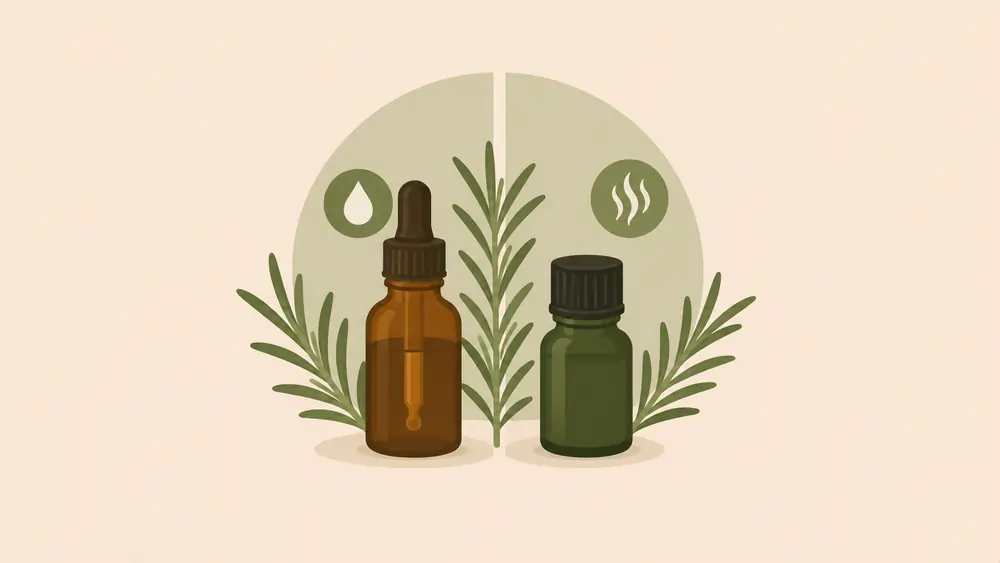
Rosemary extract means that compounds from rosemary plant material have been processed into a preparation. That preparation may be dry, liquid, oil-based, water-based, alcohol-based, or used in a food, supplement, or cosmetic formula.
The word “extract” is broad. It does not automatically mean tincture, capsule, essential oil, or standardized supplement. You need the rest of the label to understand the product category.
A good rosemary extract label should show the botanical name, plant part, form, serving size if it is a dietary supplement, extraction details when relevant, and warnings. If the label only says “rosemary extract” without context, you do not yet know enough.
Quick Fact Box: Key Rosemary Extract Terms
| Label Term | What It Usually Means | Buyer Note |
|---|---|---|
| Rosmarinic acid | A known phenolic compound found in rosemary and other mint-family plants | Useful marker, not a full quality score |
| Carnosic acid | A rosemary diterpene often discussed in antioxidant research | Often appears in standardized extract labels |
| Carnosol | A related diterpene compound associated with rosemary extracts | May appear with carnosic acid in technical descriptions |
| Rosmarinus officinalis | Traditional botanical name for rosemary | Still widely used on labels |
| Salvia rosmarinus | Updated botanical name used in newer taxonomy | Can refer to the same culinary rosemary plant |
| Standardized extract | Extract adjusted or measured for a named marker compound | Check the exact percentage or amount |
| Essential oil | Highly concentrated aromatic oil | Not the same as rosemary extract for internal use |
Why Do Labels Use Rosmarinus officinalis and Salvia rosmarinus?
Rosemary has a taxonomy wrinkle. Many consumers know the botanical name Rosmarinus officinalis. Newer botanical classification places rosemary under Salvia rosmarinus. Because of that, you may see either name on labels, articles, and plant databases.
For everyday label reading, both names may point to rosemary. The key is to check the full label, not only the botanical name. You still need plant part, format, serving size, and product category.
A label that says Rosmarinus officinalis leaf extract and a label that says Salvia rosmarinus leaf extract may both refer to rosemary. But the extract type, serving, and intended use can still differ.
What Is Rosmarinic Acid?
Rosmarinic acid is a phenolic compound associated with rosemary and several other plants in the mint family. It is often discussed in rosemary extract research and sometimes appears on standardized extract labels.
If a label lists rosmarinic acid, it may be using it as a marker compound. A marker compound helps describe or measure part of an extract’s profile.
However, rosmarinic acid alone does not tell you whether a product is right for you. It does not replace serving size, plant part, safety warnings, testing, or product category.
What Is Carnosic Acid?
Carnosic acid is one of the best-known rosemary compounds discussed in antioxidant and stability research. It is a phenolic diterpene found in rosemary leaves and extracts.
Some rosemary extracts are standardized for carnosic acid. That means the manufacturer is measuring or targeting a specific level of that compound.
Do not assume a higher carnosic acid number is automatically better for every user. More of a marker compound does not automatically mean the product is safer, more appropriate, or better suited to your routine.
What Is Carnosol?
Carnosol is another rosemary diterpene often discussed alongside carnosic acid. These compounds are related in rosemary chemistry and are common in technical discussions of rosemary extract.
A label may list carnosol, carnosic acid, or total diterpenes depending on the manufacturer’s testing and positioning. The language can vary.
For a consumer, the most useful move is to ask what the label actually provides: the amount, percentage, standardization statement, serving size, and intended product category.
Rosmarinic Acid vs Carnosic Acid vs Carnosol
| Compound | Simple Description | Where It May Appear on Labels | What Not to Assume |
|---|---|---|---|
| Rosmarinic acid | Phenolic compound found in rosemary and related herbs | Standardized extracts, technical sheets, research summaries | Not a complete measure of product quality |
| Carnosic acid | Rosemary diterpene often discussed in antioxidant research | Standardized rosemary extracts, food antioxidant extracts | Higher number does not automatically mean better |
| Carnosol | Related rosemary diterpene | Technical extract descriptions, research summaries | Not a stand-alone safety or benefit score |
| Total phenolics | Broad category of plant compounds | Lab reports, technical specifications | Not specific enough without context |
| Total antioxidants | Marketing or testing phrase | Product pages and promotional materials | Can be vague if no method is listed |
What Does Standardized Rosemary Extract Mean?
Standardized rosemary extract means the product is measured or adjusted to contain a stated amount or percentage of one or more marker compounds. For rosemary, those markers may include carnosic acid, rosmarinic acid, carnosol, or total phenolics.
Standardization can help with consistency. It tells you the manufacturer is not just listing rosemary as a vague plant ingredient. But it still does not answer every question.
You still need to check serving size, product category, other ingredients, testing, plant part, and warnings. A standardized extract can be clearer than a vague extract, but it is not automatically the best option for every person.
Why “More Compounds” Does Not Always Mean Better
It is tempting to choose the label with the longest list of compounds. That can be a mistake. More named compounds can mean better transparency, but it can also be marketing noise if the label lacks serving size, testing, or practical directions.
A rosemary extract with clear botanical name, plant part, serving size, standardization, and safety warnings is more useful than a product that only lists impressive compound names.
For supplement buyers, clarity matters more than technical overload. If a label looks scientific but leaves you guessing how much to use or what product category it belongs to, it is not beginner-friendly.
Rosemary Extract vs Tincture vs Essential Oil
Rosemary extract is a broad category. Rosemary tincture is a liquid extract, often made with alcohol, water, glycerin, or a blend. Rosemary essential oil is a highly concentrated aromatic oil and should not be treated as a tincture or supplement.
These forms cannot be compared by one compound name alone. A tincture label may focus on serving size and liquid base. A standardized extract may focus on carnosic acid or rosmarinic acid. An essential oil label may focus on aroma, topical use, or cosmetic use.
Do not swallow rosemary essential oil. It is not a substitute for rosemary tincture, rosemary tea, capsules, culinary rosemary, or a standardized rosemary supplement.
Rosemary Extract in Food vs Supplements vs Cosmetics
Rosemary extract may appear in very different product categories. In foods, rosemary extract may be used as an antioxidant ingredient to help preserve oils or flavor stability. In supplements, it may appear as a capsule, tincture, tablet, powder, or liquid extract. In cosmetics, it may appear in hair, scalp, skin, or fragrance formulas.
The same phrase does not create the same use. A cosmetic rosemary extract is not automatically a dietary supplement. A food antioxidant ingredient is not automatically a supplement serving.
Secrets Of The Tribe takes a conservative editorial stance here: the first step is always to identify the product category before interpreting compound names.
How to Read a Rosemary Extract Label
A rosemary extract label should help you answer basic questions. What plant is it? What part of the plant is used? What form is the product? What amount is included? Is it standardized? What is the intended use?
For dietary supplements, look for the Supplement Facts panel. It should include serving size and ingredient information. For botanical dietary ingredients, plant part information matters because leaf, herb, aerial parts, and oil are not the same thing.
For cosmetics or essential oils, look for external-use directions, dilution instructions, ingredients, and warnings. Do not use a cosmetic product internally because it contains rosemary extract.
Label Checklist: Rosemary Extract Terms
Use this checklist before buying rosemary extract, tincture, capsules, powder, essential oil, or cosmetic rosemary products. The goal is to separate useful label information from vague chemistry language and category confusion.
Confirm the Botanical Name
Look for Rosmarinus officinalis or Salvia rosmarinus. Either may appear because rosemary taxonomy has shifted over time.
Identify the Plant Part
Check whether the label says leaf, herb, aerial parts, oil, extract, or another plant-part term. Plant part matters for comparison.
Find the Product Category
Decide whether the product is a supplement, food ingredient, cosmetic, hair product, tincture, capsule, powder, or essential oil.
Check the Marker Compound
If the label lists rosmarinic acid, carnosic acid, or carnosol, check the amount or percentage. Do not rely on the name alone.
Read the Serving Size
For supplements, check capsules, drops, milliliters, grams, tablets, or other serving units. Avoid front-label number comparisons without serving context.
Look for Standardization
If the label says standardized extract, find what compound is standardized and to what amount or percentage.
Separate Essential Oil From Extract
Rosemary essential oil is not a tincture or supplement. Do not swallow it or substitute it for rosemary extract.
Review Safety Warnings
Ask a qualified professional if you are pregnant or breastfeeding, take medication, have seizure history, bleeding concerns, allergies, or a diagnosed condition.
Common Mistakes to Avoid
Assuming All Rosemary Extracts Are Supplements
Rosemary extract can appear in food, supplements, cosmetics, and hair products. Product category matters.
Choosing by One Compound Only
Rosmarinic acid, carnosic acid, and carnosol are useful terms, but none of them tells the full label story alone.
Confusing Old and New Botanical Names
Rosmarinus officinalis and Salvia rosmarinus may both refer to rosemary. Read the rest of the label for format and use.
Thinking Standardized Means Best
Standardization can improve clarity, but it does not automatically make a product more appropriate for every user.
Swallowing Rosemary Essential Oil
Essential oil is not rosemary extract for internal use. Do not drink it, add it to tea, or use it as a tincture replacement.
Safety Notes Before Using Rosemary Supplements
Rosemary used as food seasoning is different from concentrated rosemary extract. Supplements, tinctures, capsules, powders, and essential oils require more careful label reading.
Pregnant or breastfeeding people should avoid self-directed rosemary supplement use unless a qualified healthcare professional provides personalized guidance. People with seizure disorders, bleeding concerns, allergies, upcoming surgery, or medication use should also ask before using concentrated rosemary products.
Do not use rosemary extract to self-manage memory concerns, hair loss, pain, inflammation, infection, digestion issues, blood pressure, or any diagnosed condition. Seek appropriate medical care for symptoms that are severe, unusual, persistent, or worsening.
FAQ about Rosemary Extract Label Guide
What is rosemary extract?
Rosemary extract is a processed rosemary preparation used in supplements, foods, cosmetics, or other products depending on the label.
What is rosmarinic acid?
Rosmarinic acid is a phenolic compound found in rosemary and other mint-family plants. It may appear as a marker compound on labels.
What is carnosic acid?
Carnosic acid is a rosemary diterpene often discussed in rosemary extract research and standardization.
What is carnosol?
Carnosol is a rosemary compound related to carnosic acid and may appear in technical extract descriptions.
Is Salvia rosmarinus the same as rosemary?
Yes, Salvia rosmarinus is a newer botanical name used for rosemary. Rosmarinus officinalis is still widely used on labels.
What does standardized rosemary extract mean?
It means the extract is measured or adjusted for a stated marker compound, such as carnosic acid or rosmarinic acid.
Is more carnosic acid always better?
No. A higher marker number does not automatically mean better quality, safety, or suitability.
Is rosemary extract the same as rosemary essential oil?
No. Rosemary essential oil is a concentrated aromatic oil and should not be swallowed or used as a tincture substitute.
What should I check on a rosemary extract label?
Check botanical name, plant part, product category, serving size, standardization, marker compounds, other ingredients, and warnings.
Glossary
Rosemary Extract
A processed preparation made from rosemary plant material and used in supplements, foods, cosmetics, or other products.
Rosmarinic Acid
A phenolic compound associated with rosemary and other mint-family plants.
Carnosic Acid
A rosemary diterpene often used as a marker compound in standardized extracts.
Carnosol
A rosemary compound related to carnosic acid and often discussed in extract chemistry.
Rosmarinus officinalis
A traditional botanical name for rosemary that still appears widely on labels.
Salvia rosmarinus
A newer botanical name for rosemary used in updated plant taxonomy.
Standardized Extract
An extract measured or adjusted to contain a stated amount or percentage of a marker compound.
Marker Compound
A compound used to describe, measure, or compare part of an extract’s chemical profile.
Essential Oil
A highly concentrated aromatic oil that is not the same as a dietary supplement extract.
Supplement Facts
The label panel on dietary supplements that lists serving size and dietary ingredient information.
Conclusion
A rosemary extract label guide should help you read the whole label, not chase one compound name. Check botanical name, plant part, product category, serving size, standardization, marker compounds, and safety warnings before choosing a rosemary product.
Sources
Review of rosemary compounds including rosmarinic acid, carnosic acid, and carnosol, PubMed Central — pmc.ncbi.nlm.nih.gov/articles/PMC7284349
Review of carnosic acid and carnosol as major rosemary compounds, PubMed Central — pmc.ncbi.nlm.nih.gov/articles/PMC5664485
Dietary supplement plant-part labeling requirements and Supplement Facts guidance, U.S. Food and Drug Administration — fda.gov/food/dietary-supplements-guidance-documents-regulatory-information/dietary-supplement-labeling-guide-chapter-iv-nutrition-labeling
Rosemary extract composition and extraction discussion including rosmarinic acid, carnosic acid, and carnosol, ScienceDirect — sciencedirect.com/science/article/abs/pii/S0896844624001797
Rosemary botanical profile using Salvia rosmarinus, North Carolina Extension Gardener Plant Toolbox — plants.ces.ncsu.edu/plants/salvia-rosmarinus
Federal dietary supplement serving-size and Supplement Facts requirements, Electronic Code of Federal Regulations — ecfr.gov/current/title-21/chapter-I/subchapter-B/part-101/subpart-C/section-101.36
Rosemary taxonomy and Salvia rosmarinus plant profile, Missouri Botanical Garden — missouribotanicalgarden.org/PlantFinder/PlantFinderDetails.aspx


No comments